
Entryway Shoe Storage for Families: A Daily Slot System
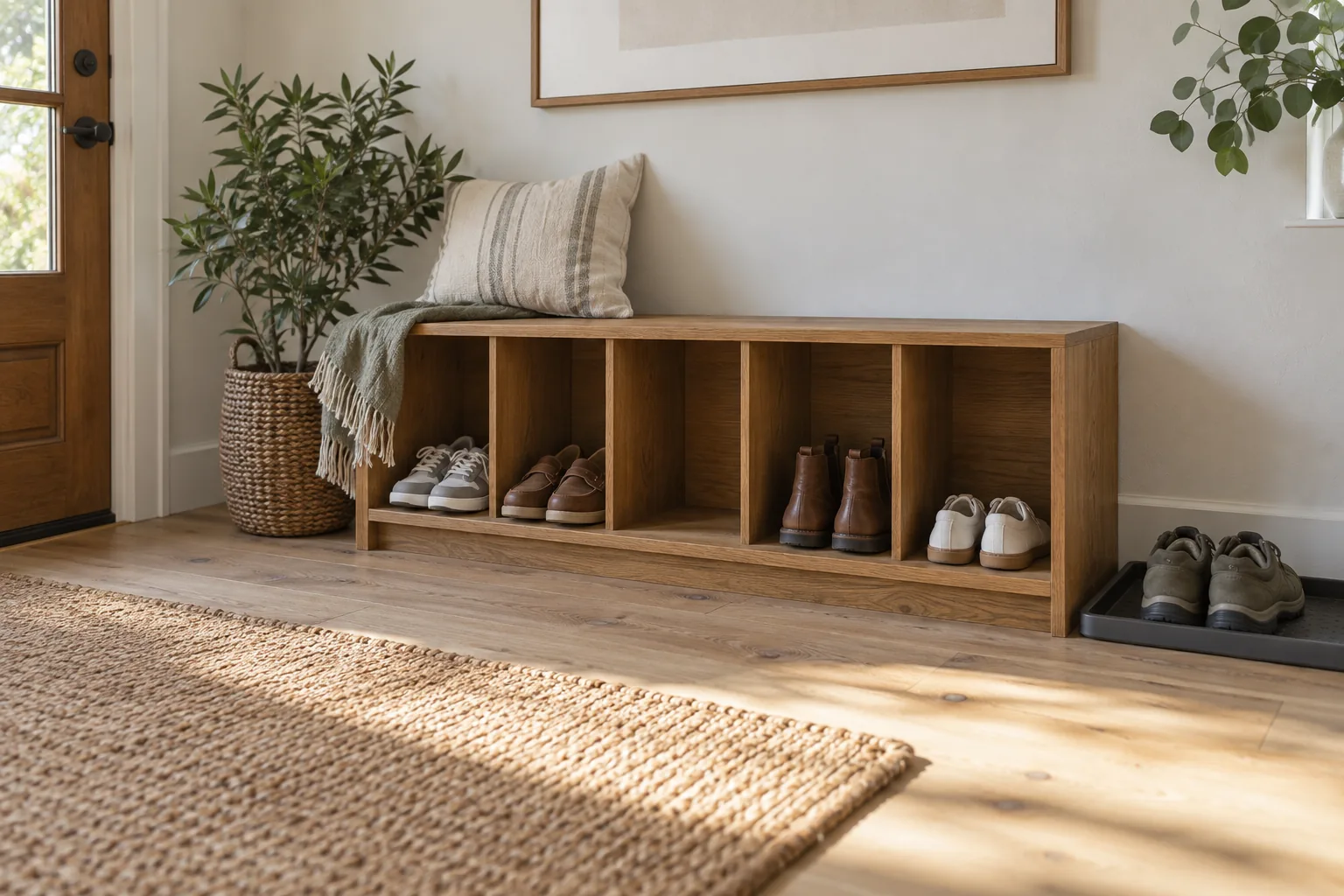
Audit the shoes your household actually uses, assign verified daily slots by person, and use clear overflow and reset rules when the setup stops working.
Fit, depth, capacity, clearance, and layout guides for choosing storage that works in the complete entryway.
Audit the shoes your household actually uses, assign verified daily slots by person, and use clear overflow and reset rules when the setup stops working.
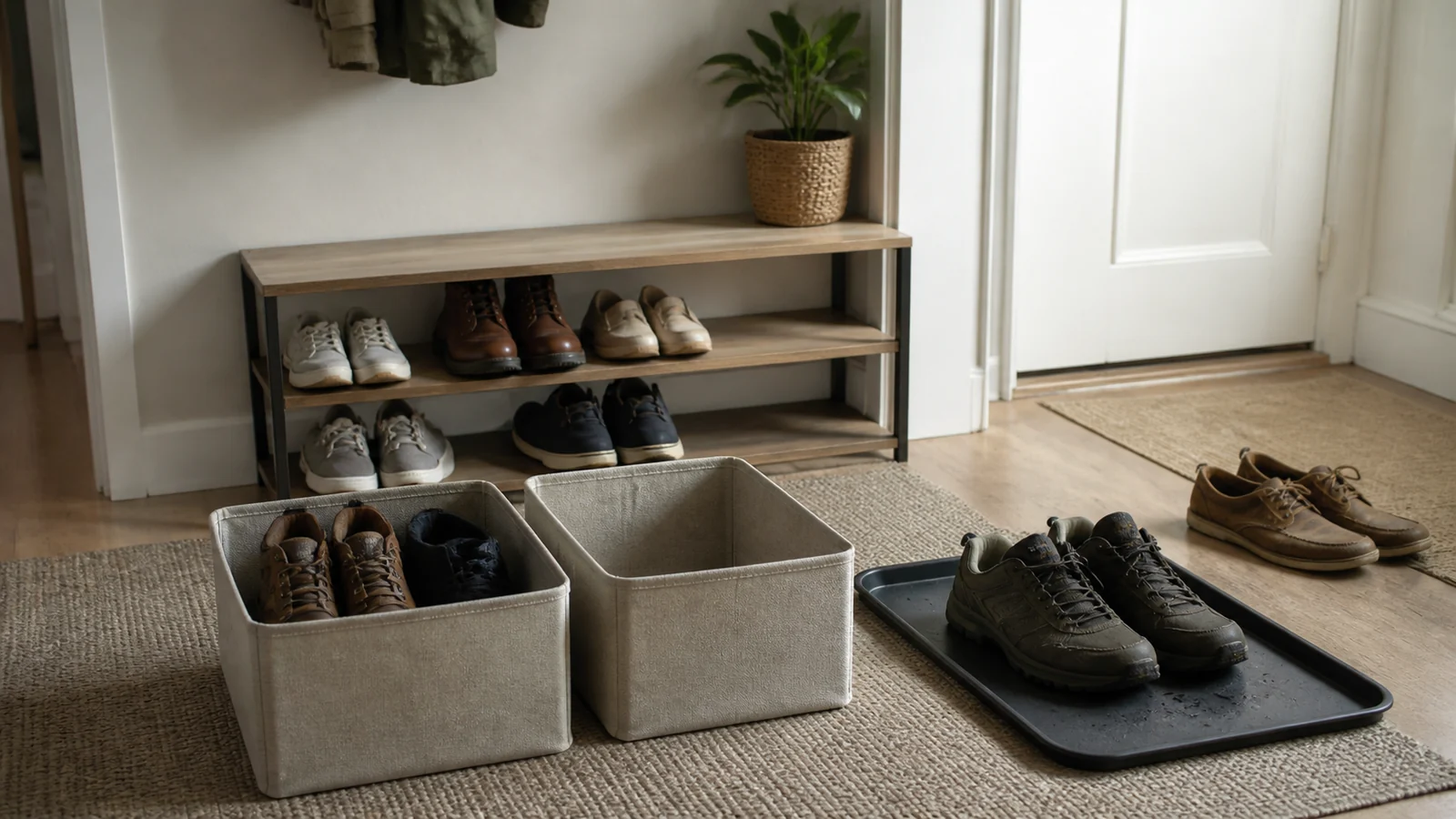
Build a repeatable seasonal shoe-rotation workflow for a small entryway, with active, reserve, transition, wet/drying, and repair/out states.
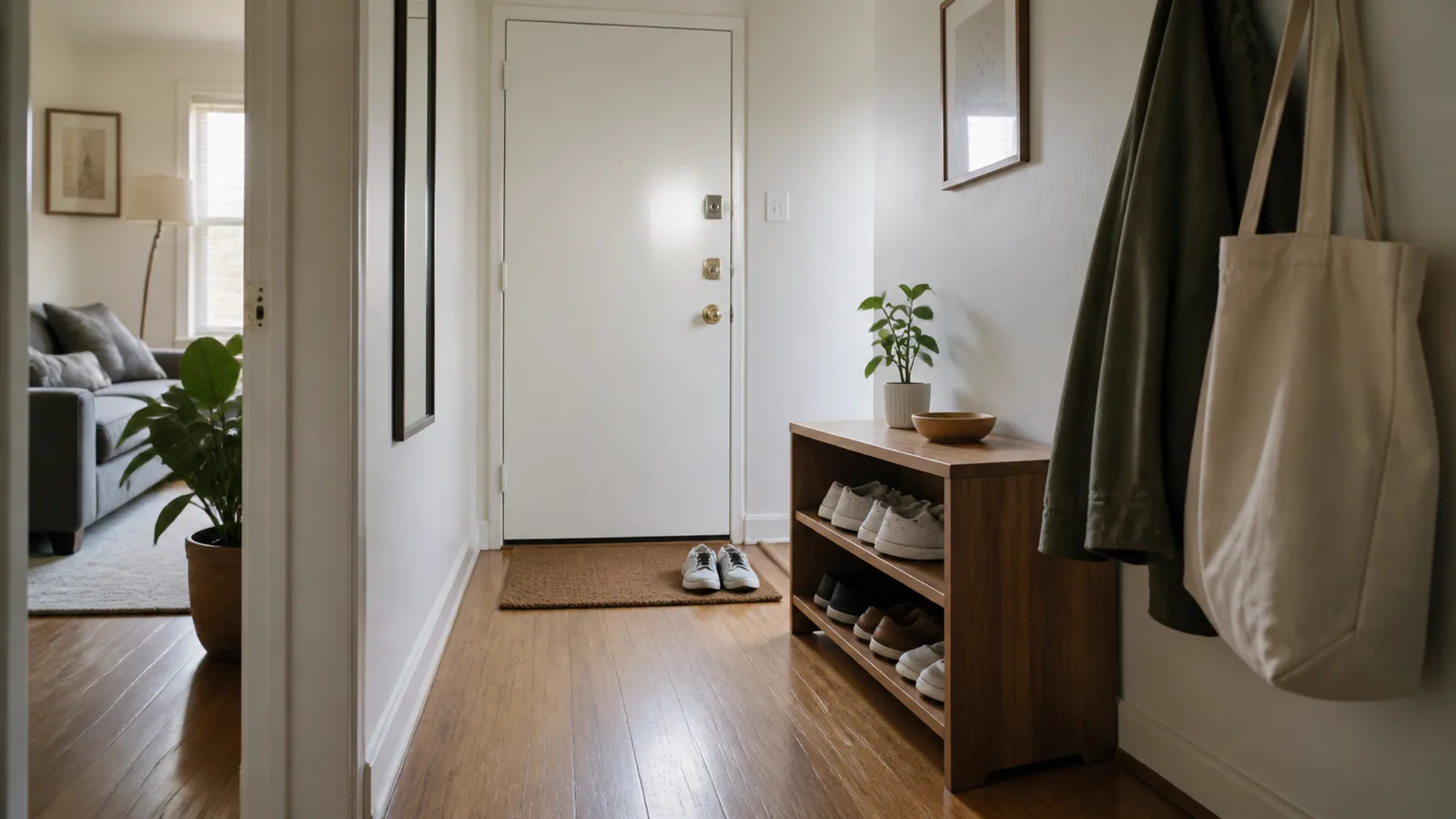
Measure Fit, check Flow, sort your Routine, then keep, resize, relocate, or reject entrance shoe storage.
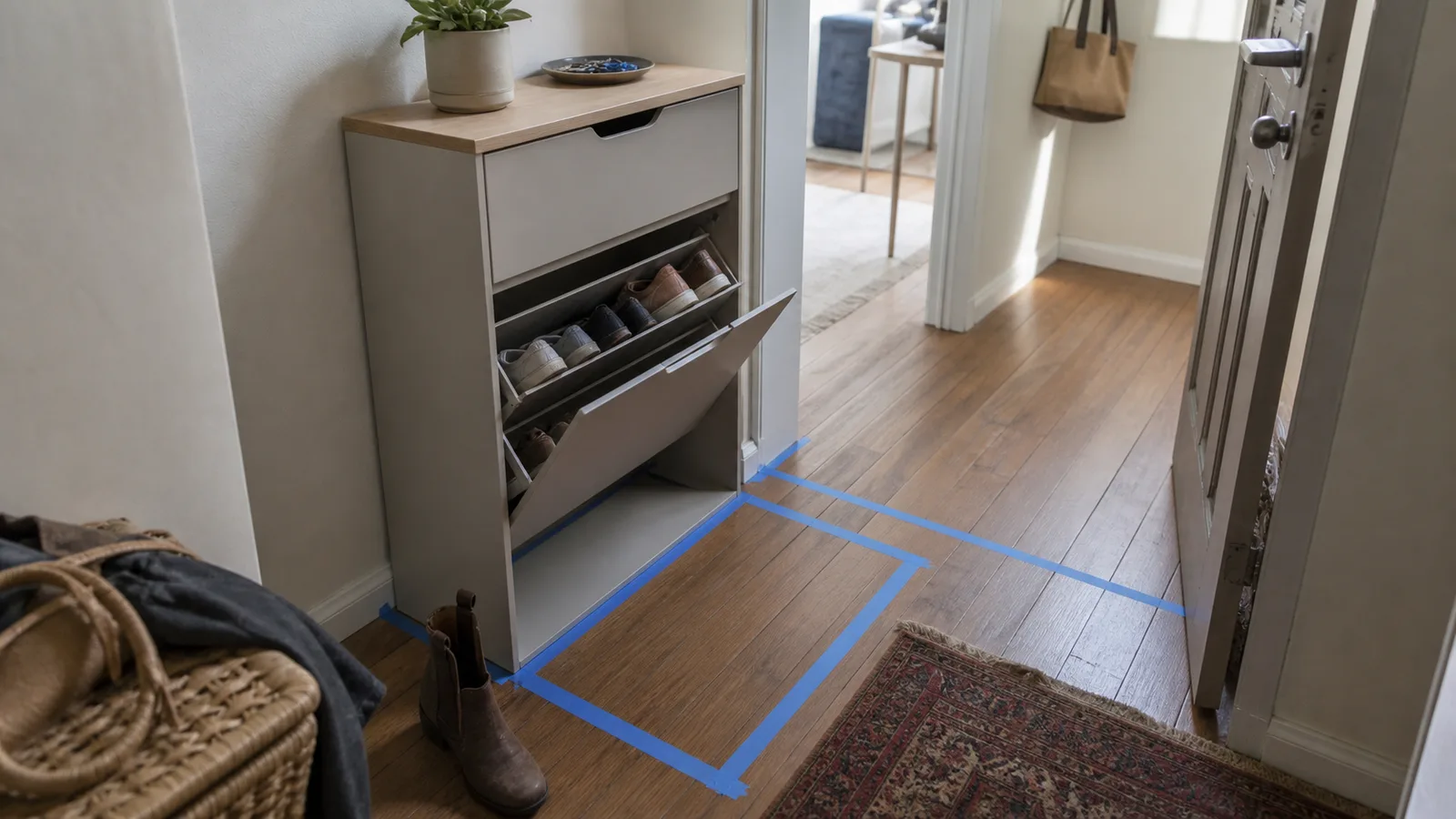
Measure your entryway, preserve chosen route clearance, and test closed depth, open projection, loading space, representative footwear, and capacity assumptions before choosing shoe storage.
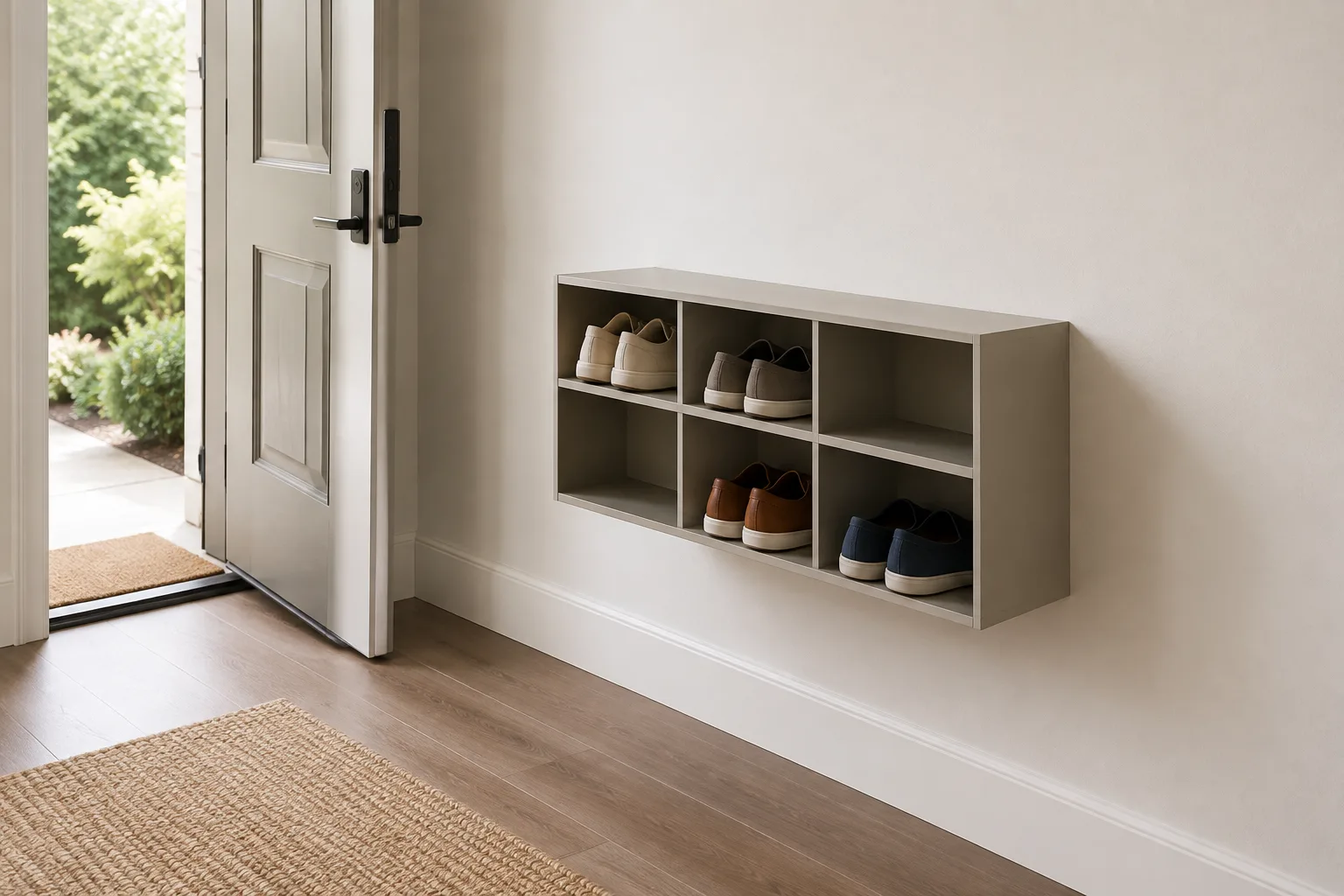
Measure footwear, closed/open projection, route, wall-document inputs, and property permission before choosing wall-mounted shoe storage.
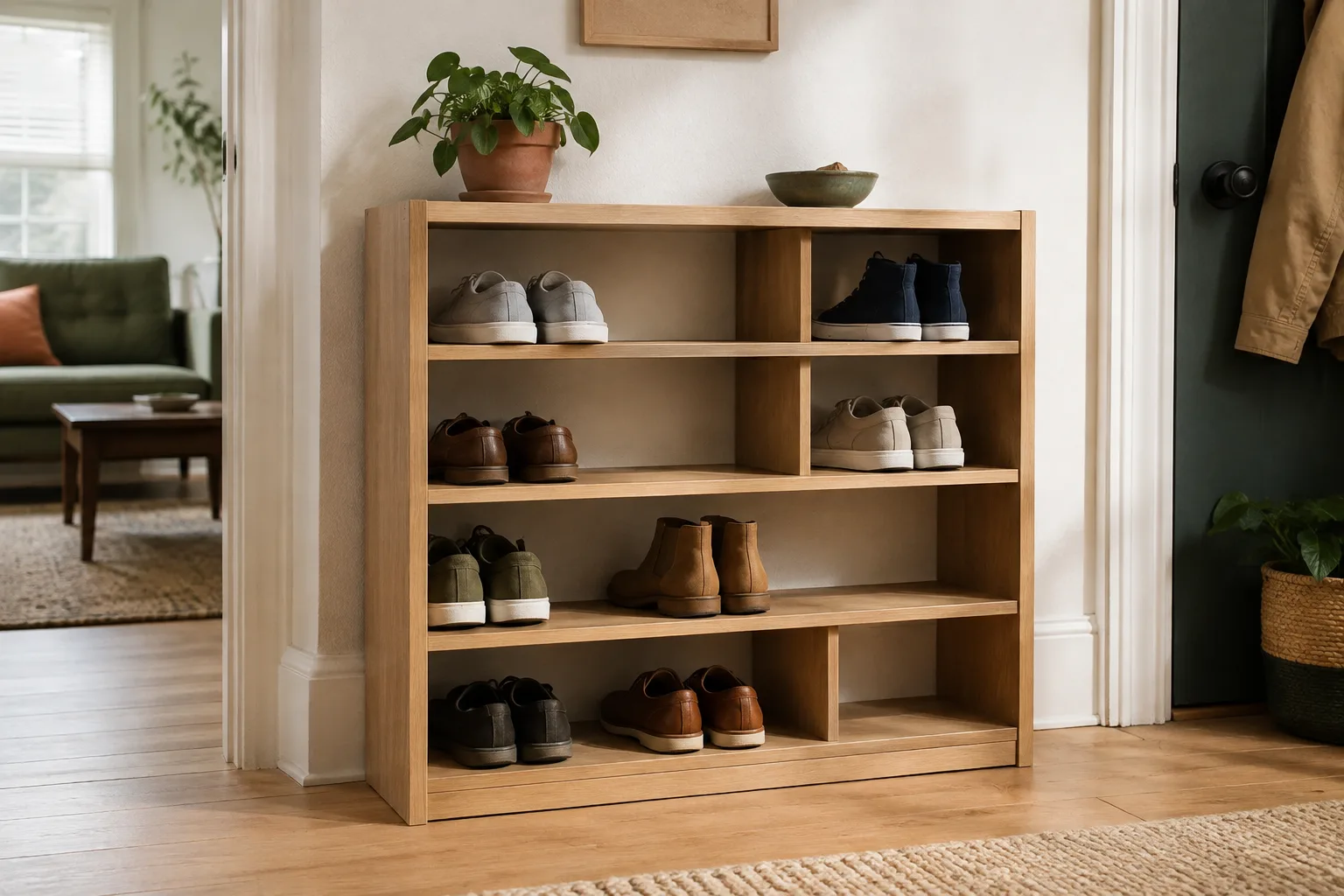
Use internal dimensions, representative footwear, and a shelf-by-shelf equation to estimate realistic shoe-storage capacity before buying.
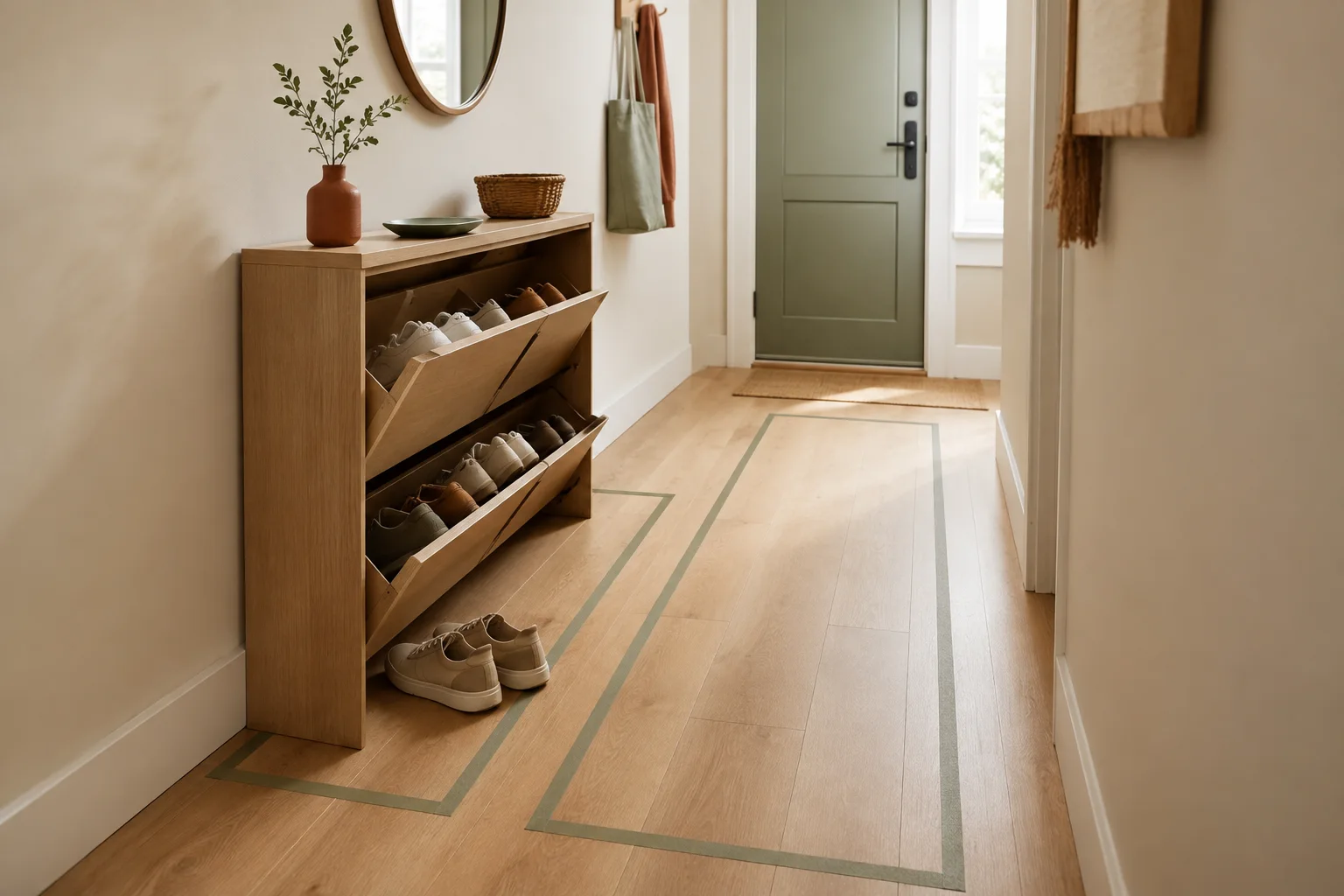
Use a clearance-first layout method to place shoe storage without blocking walking routes, doors, footwear access, or required installation space.
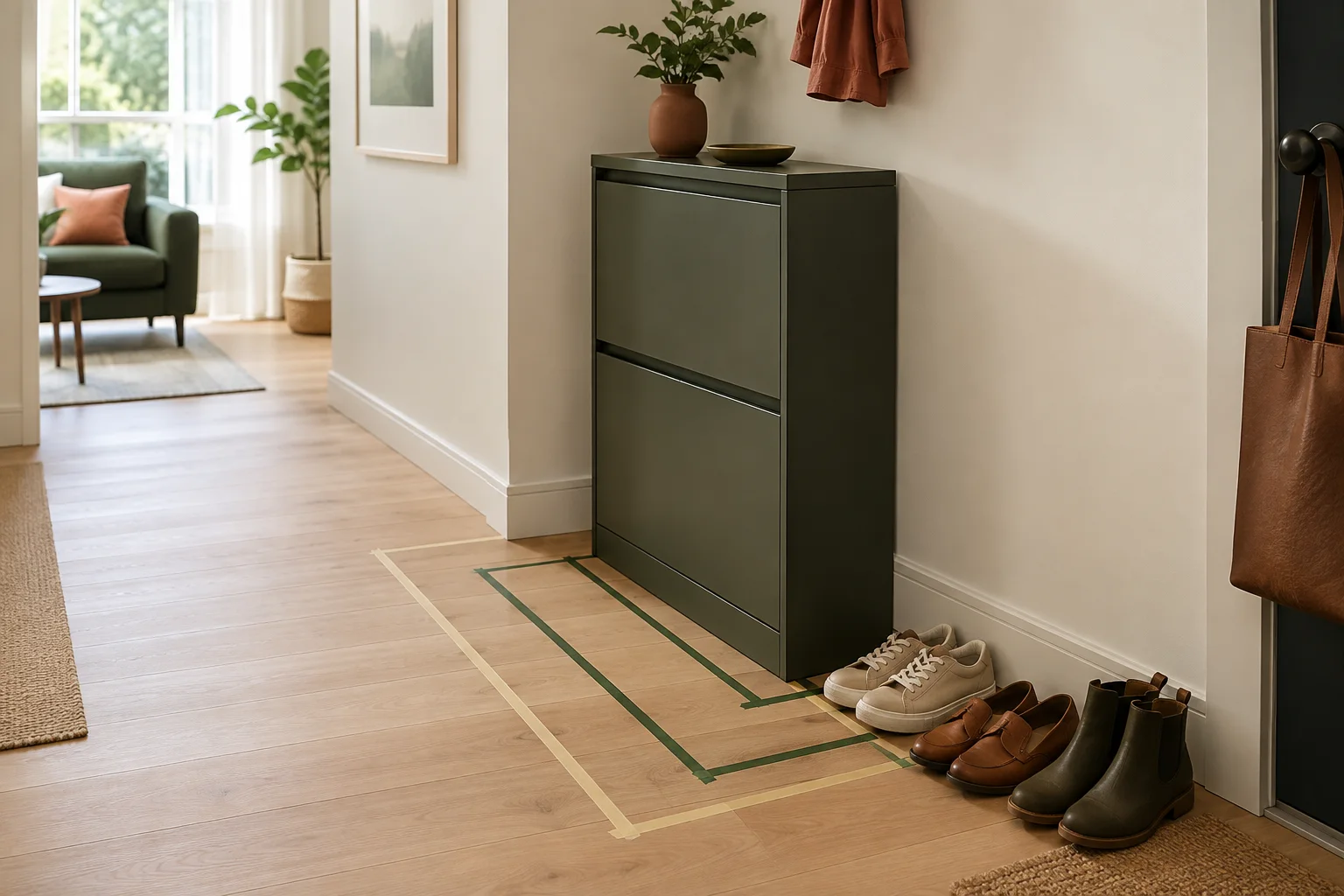
Calculate a reader-specific shoe cabinet depth budget, then test opening projection, baseboards, footwear fit, route clearance, and exact mounting requirements.
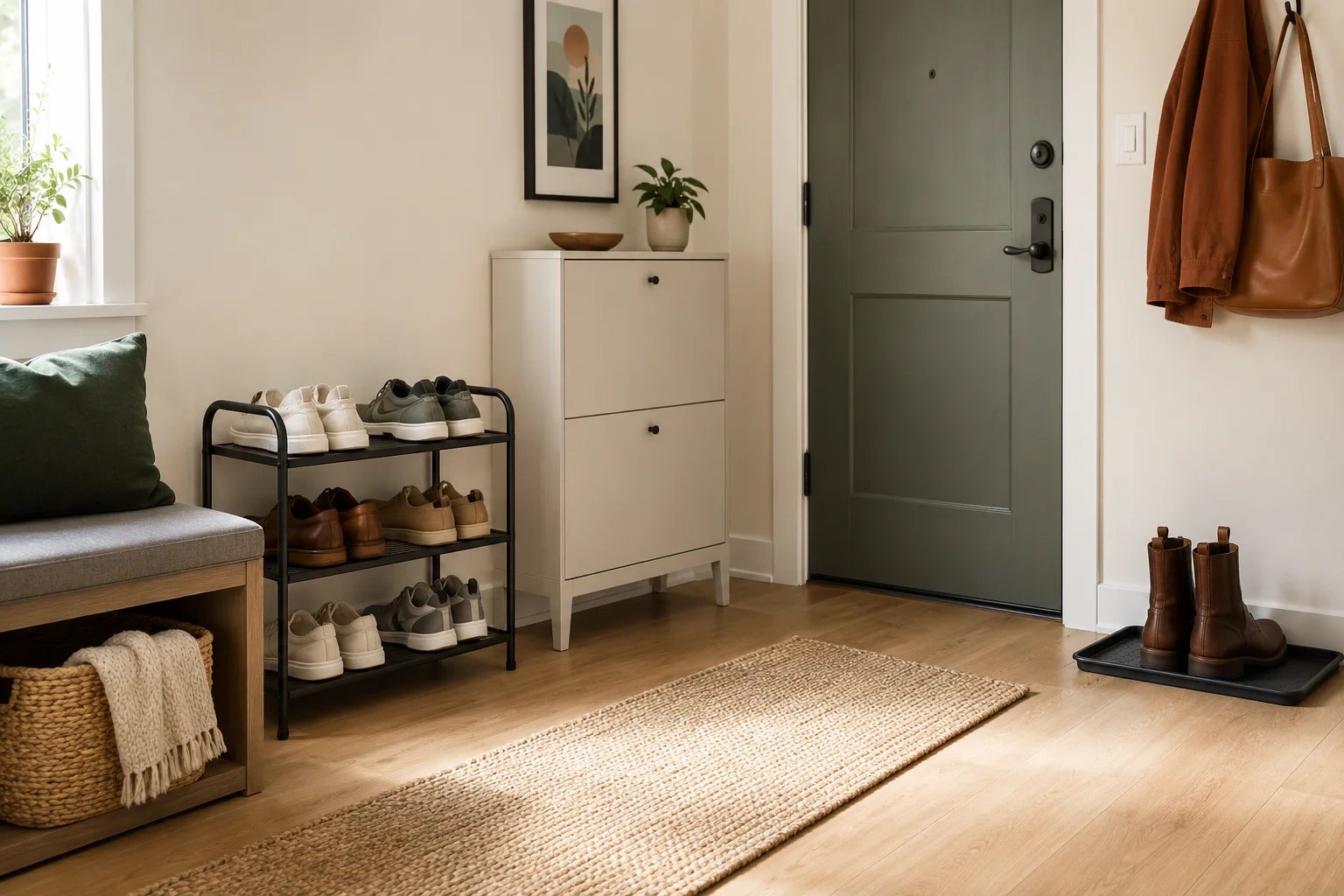
Measure your entryway, walking path, footwear, and daily routine before choosing a rack, cabinet, bench, tray, or mixed shoe-storage system.